
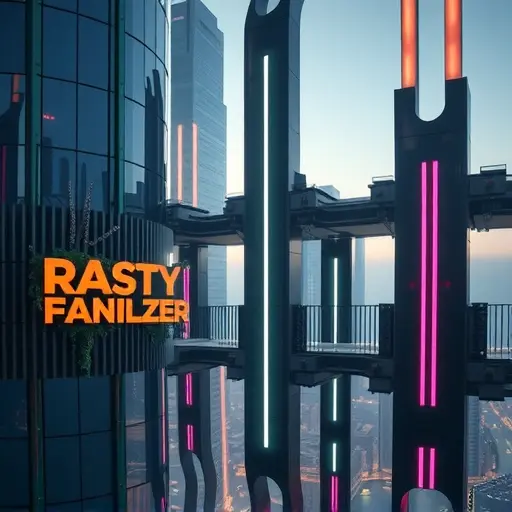
Spice Up Your Creative Projects with Midjourney AI
- kylixie
- Apr 30, 2025
- 5 min read
Did you know artificial intelligence can help video editors and other creatives? Tools like Midjourney do more than just make art. They can help give your projects a better look, higher quality, and maybe even more views.
Midjourney is an AI that creates images from text descriptions. It's fast and gives you creative visuals in seconds. This guide gives you the basics to help you get started with Midjourney.
Getting Started with Midjourney
To use Midjourney, you need Discord. Discord is a free server where you can join communities, chat, and connect with others.
Join the Midjourney Server
Go to the Midjourney website.
Click the "Join" button.
Discord will ask you to join the Midjourney server. Click to accept.
Complete any needed checks.
You are now in the Midjourney server! You'll see a typing box. This is where you write your requests, called "prompts."
One cool thing about Midjourney is that you can see images others are creating in real-time. This can give you new ideas.
Get Your Own Space
If you want to create images privately, away from the main community feed, you can create your own server on Discord. Here's how:
In Discord, click "Add Server."
Choose "Create a Server."
Select "Just for me and my friends."
Give your server a name and create it.
Go back to the Midjourney server, click the Midjourney bot icon, and select "Add to Server."
Choose your new server from the list and authorize the bot.
Now you can use Midjourney in your private server where only you and invited friends can see your work.
As you begin using Midjourney more for creative tasks, you might find the process requires many steps. For help automating parts of your workflow, check out the Midjourney Automation Suite from TitanXT. It streamlines common tasks.
Using Prompts to Create Images
Prompts are text descriptions that tell the AI what image to make. It's like telling an artist what you want to see.
Your First Image
In the message box, type `/imagine` and press the spacebar. This starts the command.
After `/imagine prompt:`, type what you want to create. For example, `waterfall`.
Press Enter.
Midjourney will create four images based on your prompt, usually within 60 seconds.
Understanding the Buttons
Below the generated images, you will see buttons like U1, U2, U3, U4 and V1, V2, V3, V4.
U buttons (U1, U2, etc.): These "upscale" the image. This means the AI creates a more detailed, larger version of the selected image (U1 for the top-left image, U2 for top-right, and so on).
V buttons (V1, V2, etc.): These create variations of the selected image. You get four new images that are similar in style and composition to the one you chose.
Once you upscale an image, you get more options like "Very Subtle" and "Very Strong" to make small or big changes, "Upscale" to make it larger, "Zoom Out," and directional arrows to expand the image on specific sides.
If you want more control over your outputs and maybe automate repeating tasks, explore the Midjourney Automation Suite from TitanXT.
Midjourney Settings and Style
You can change how Midjourney creates images using settings.
Accessing Settings
Type `/settings` in the message box and press Enter. You will see a menu with many options.
Midjourney Versions
Midjourney has different versions (like V5, V5.2, etc.). Each version has a different style.
Some versions are better for photos.
Others lean towards anime or a cartoon style.
You can click buttons in the settings menu to switch versions.
You can also add version information to your prompt like `--v 5.2`.
Other Useful Settings
Raw Mode: Gives you images with less automatic artistic effects.
Stylize: Controls how artistic Midjourney gets. Higher stylization means more creativity is added to your prompt.
Public Mode: Your creations are visible in the community feed. You can delete images if you want them removed.
Fast Mode: Gives results quicker.
Remix Mode: Allows you to change your prompt when creating variations, blending ideas from the original image with new descriptions.
High/Low Variation Mode: Controls how different the variations (using V buttons) are from the original image.
Becoming a Prompt Master
Writing good prompts is key to getting the images you want. You can add details to your basic prompts to change the outcome.
Camera Angle: After your main subject, add phrases like `bird's eye view`, `wide shot`, `mid shot`.
Lighting: Specify the light, for example, `dusty light`, `moonlight`, `candlelight`, `rim light`.
Color: Tell Midjourney the colors to use, like `yellow mood`, `green tones`, `red light`.
Using Images in Prompts
You can use an image as part of your prompt.
Copy the web address (URL) of an image.
Paste the image URL at the start of your prompt after `/imagine prompt:`.
Then add your text description. Midjourney will try to create an image that combines the style or content of the image URL with your text.
You can even use multiple image URLs to blend different images together.
Use the `/blend` command to easily mix 2-5 images.
Aspect Ratio
You can control the shape of your image using the aspect ratio parameter. Add `--ar` and then the ratio, like `--ar 16:9` for a wide image or `--ar 2:3` for a tall one.
Chaos Parameter
The chaos parameter (`--c`) changes how varied and unexpected the results are. `--c 0` gives similar results each time, while higher numbers (up to 100) create more unusual outputs.
Excluded Prompts (No Command)
Tell Midjourney what you *don't* want in the image using the `--no` command. For example: `a forest road --no trees`
Prompt Weight
Use `--iw` to give more importance to an image prompt compared to the text prompt (values from 0 to 2).
Using Seeds
Midjourney uses a "seed" number to create an image. If you find an image you like and want to make changes while keeping a similar overall structure, find the seed number of that image.
Copy the seed number (often available via reactions or in image info).
Generate the image again using your original prompt and add `--seed [seed number]` at the end. This creates the exact same base image.
Now you can add extra prompts or parameters to modify the same base image.
Other Helpful Midjourney Tools
Describe Command
Type `/describe`. Midjourney will ask you to upload an image. Upload an image you like, and Midjourney will give you four different text prompts that could create similar images. This is great for learning how to write prompts or getting ideas.
Prefix and Suffix
If you use the same parameter often, like `--ar 16:9`, you can set it as a prefix or suffix using `/prefer suffix`. Type `/prefer suffix --ar 16:9`. Now, every prompt you write will automatically have `--ar 16:9` added to it.
Leveraging these prompt techniques helps you get the exact images you need for your creative projects. To manage all these prompts and parameters more effectively, consider using automation tools like the Midjourney Automation Suite from TitanXT.
Conclusion
Midjourney is a powerful tool for creating custom visuals. It can help you make unique art for videos, comics, or any project. Learning the basics of prompting and understanding the settings gives you lots of creative power.
Use these skills and AI-generated images to add a unique touch to your work, increase quality, and stand out.



Comments